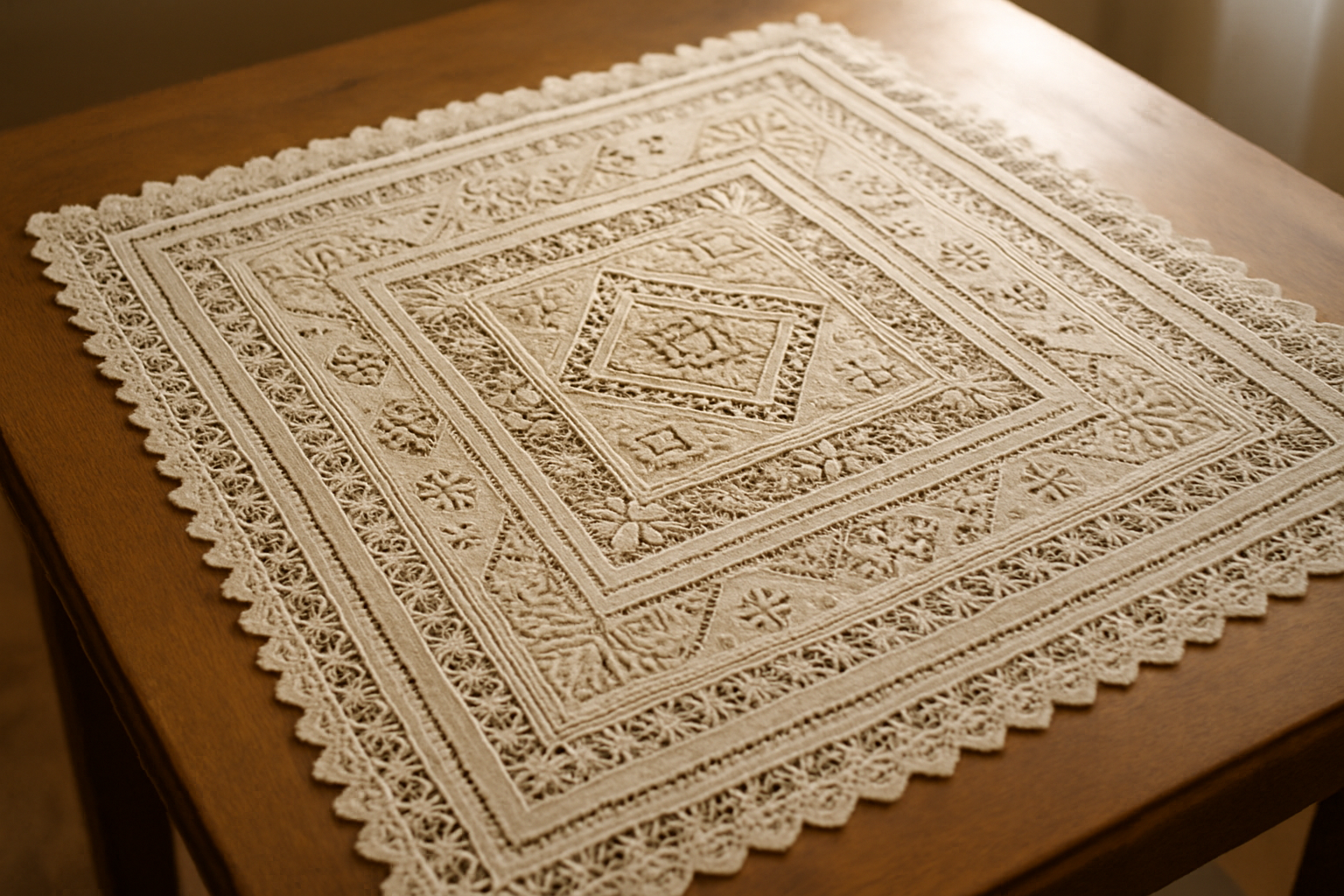
The traditional handicraft known as “Lefkara Embroidery” by Turkish Cypriots and “Lefkaritika” by Greek Cypriots has roots tracing back to the 14th century. This unique art form is regarded as a cultural heritage shaped by the craftsmanship of Cypriot women, passed down through generations. Senay Ekingen, who has conducted research on this subject, examines the significance and history of this tradition in detail.
Development Process and Research Findings
As a result of her research on Lefkara Embroidery, Senay Ekingen published a book and highlighted the contributions of Gülgün Serdar during this process. Serdar had access to numerous documents related to Lefkara’s history, providing important information that enhanced the quality of the book. Ekingen noted that the tradition of Lefkara was transmitted orally in villages and that it did not appear in written sources until the early 1900s.
The Lace History of Cyprus and Lefkara
There are two main theories regarding the emergence of Lefkara and its evolution into an art form over time. According to the first theory, the white embroideries made from Lefkara linen were influenced by the lace that came to Cyprus from Venice. With the Venetian nobles teaching Cypriot women this lace art, a lace tradition began in Lefkara. Another speculation is that the local people secretly learned the art of lace-making and combined their own traditions with this craft.
Ekingen mentioned that Leonardo da Vinci is also part of Lefkara’s history, with rumors that he used Lefkara Embroidery in his “The Last Supper” painting. This indicates that Lefkara Embroidery has secured an important place in the history of world art.
Common Values and Social Structure of Lefkara
Lefkara Embroidery has facilitated a shared cultural experience for women in the region. In the 1930s and 40s, women in Lefkara and surrounding villages were encouraged to produce this handicraft together. Ekingen stated that even after the migration of Turkish Cypriots in 1964, this tradition was maintained, with women like Zalihe Hasan continuing to teach Lefkara Embroidery in the places they migrated to.
Since the production process in this tradition is carried out with local control and solidarity, Lefkara Embroidery plays a significant role not just as an economic asset but also as a means of establishing social bonds. Lefkara serves as an example of how women come together in terms of both labor and social solidarity.
In conclusion, Lefkara Embroidery transcends being merely a handicraft, showcasing the cultural richness of Cyprus and the historical role of women. Therefore, Lefkara Embroidery has become a shared value and a trust-building element for both Turkish Cypriots and Greek Cypriots.
Source: www.yeniduzen.com