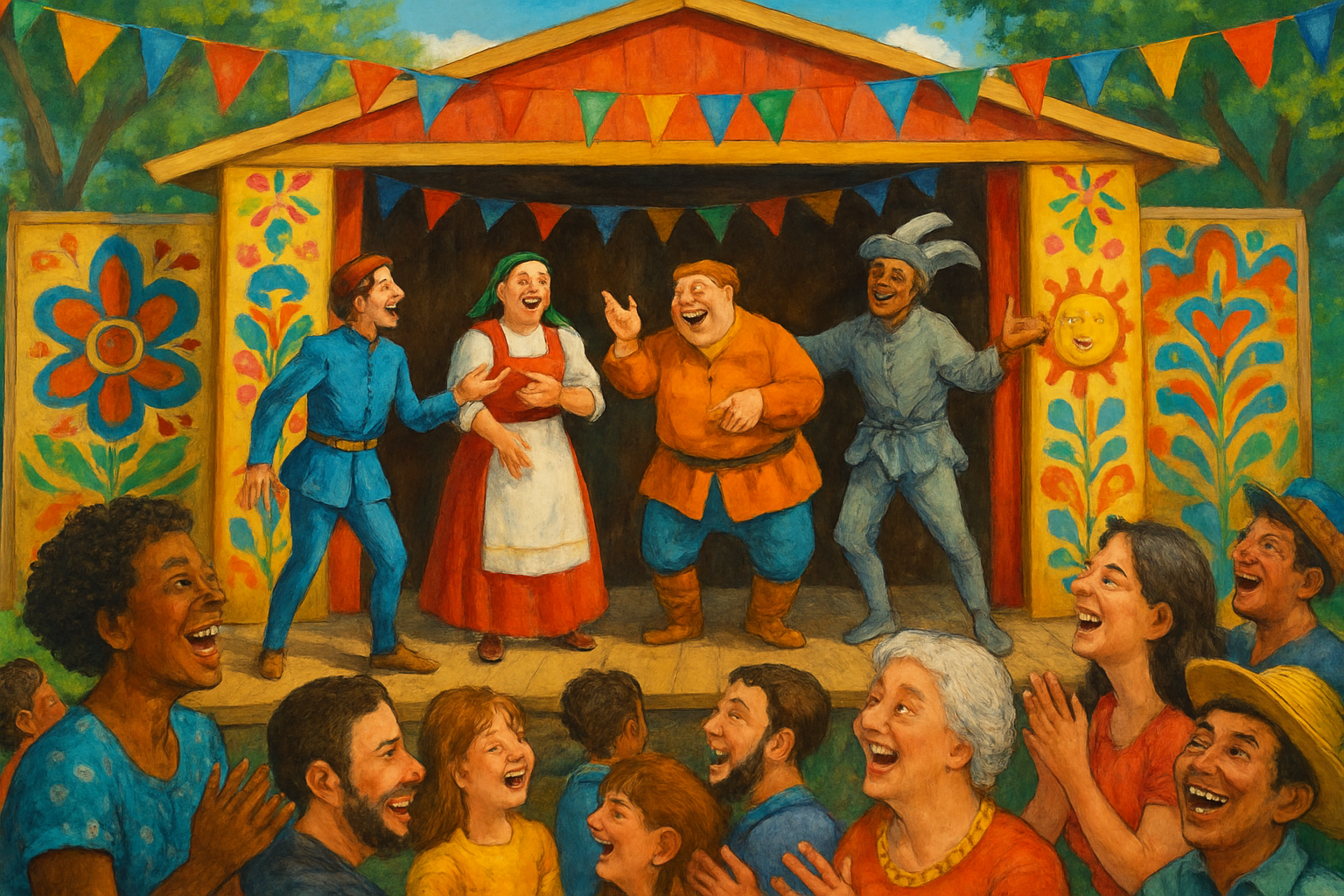
Folk Theater is an art form that aims to raise awareness of societal issues in an entertaining language. However, it is essential to first develop a certain understanding of the concept of “the people.” Traditionally, the term “people” symbolizes the working classes, laborers, and the impoverished, while in capitalist societies, this definition is expanding.
Transformation of the People Concept and Its Reflections
Many views show that the term “the people” has gained different meanings over time, from primitive societies to the present day. In feudal, multi-class societies, the people were expressed as the governed, namely the workers and peasants. Today, it is defined as a segment formed by working classes and the poor. With such an understanding, it is accepted that genuine populism must undertake the mission of safeguarding the interests of those outside the current social order. As Karl Marx stated, “The People Make History,” this phrase points to this class’s responsibility to carry out certain struggles.
The Role of Folk Theater and Humor
Folk Theater traces its roots back to ancient times and develops alongside folk culture. This art form has largely adopted a style that involves humor and critique. For instance, Bertolt Brecht’s definition of populism illustrates that art should not only meet with the broad public but also establish close ties with their thoughts and perspectives. However, many contemporary groups advocating this understanding prioritize entertaining the public, superficializing humor, and opting for simple jokes over social critique.
Humor is one of the fundamental tools of folk theater. As Aziz Nesin famously said, “Humor is not just to make you laugh; it is to make you think.” In this context, when used correctly, humor can create an effective platform for critiquing social shortcomings.
In summary, Folk Theater is a dissenting art form that reflects the realities of society. If implemented with the right understanding, it contributes to the public’s consciousness and social change. However, it requires an adoption of a theater approach that can offer much more than just entertainment.
Source: www.yeniduzen.com