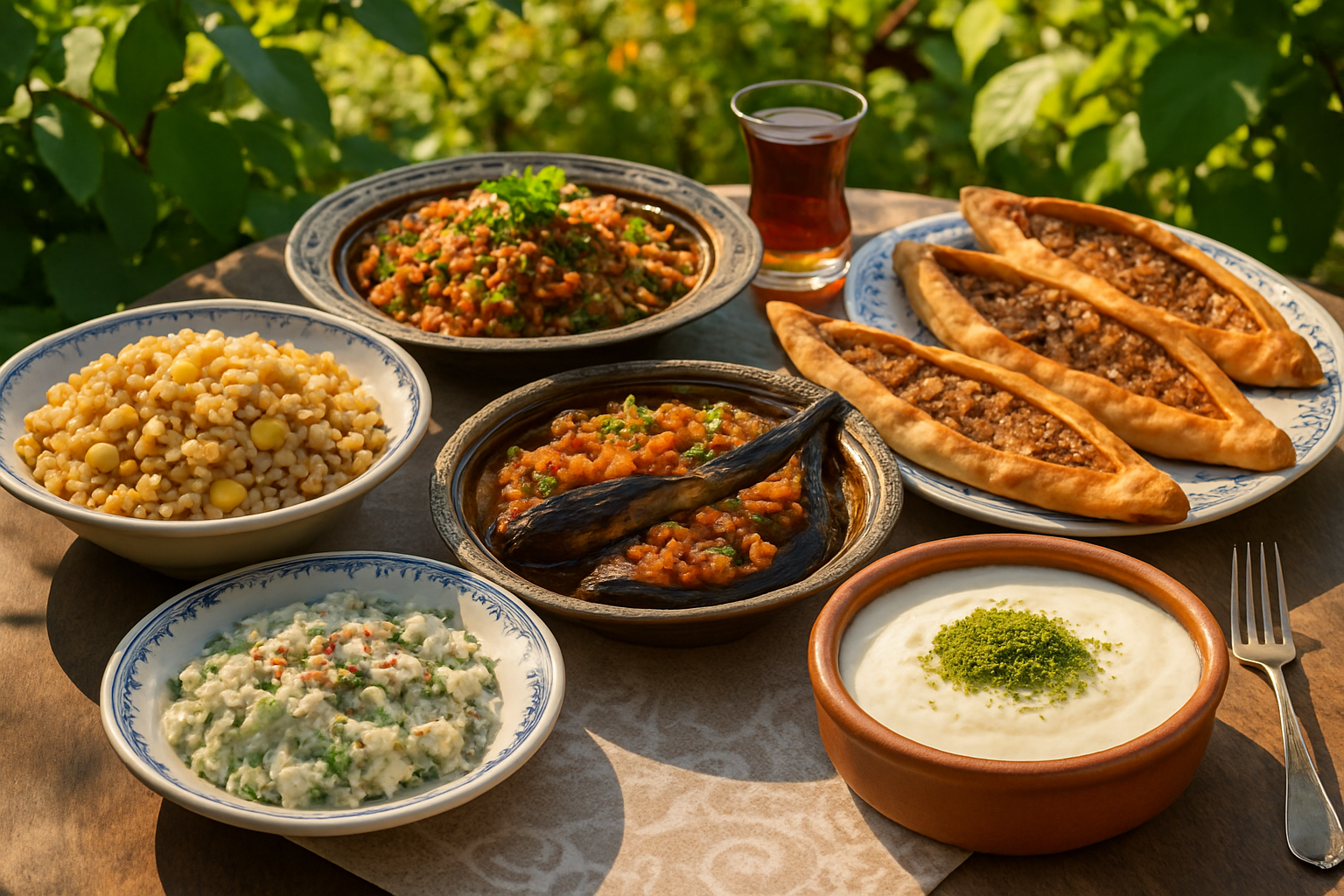
The Ottoman cuisine presents a rich culinary tradition that has blended various cultures and traditions over centuries. One of the most beloved examples of this heritage is Imam Bayildi, a dish that signifies much deeper meanings in terms of history and culture, beyond being just a meal. Similarly, Kazandibi stands out with its allure that stretches from the Ottoman palace cuisine to modern times. Both dishes highlight the deep-rooted past and culinary wealth of Turkish cuisine.
Imam Bayildi: The Queen of Olive Oil Dishes
Imam Bayildi holds an important place among olive oil dishes and is a must-have in the summer. The unforgettable taste derived from the blend of eggplant, olive oil, onion, and tomato leaves a lasting impression on the palate. There are various tales about the name of this dish; the most common one is a story suggesting that after tasting the dish made by an imam’s wife, the imam fainted. Another legend speaks of him fainting upon hearing the cost due to the generous amount of olive oil used. Regardless of the circumstances, these entertaining stories have contributed to Imam Bayildi’s unique identity.
The First Step: Preparing the Ingredients
- 1 tablespoon tomato paste (optional)
After peeling the eggplants in a striped manner, they are soaked in salty water to eliminate their bitterness. The dried eggplants are then lightly fried in a small amount of olive oil or baked in the oven. Onions are sautéed in a separate pan until they are golden brown, then combined with garlic and chopped tomatoes. This filling is placed inside the eggplants and arranged in a baking tray for cooking.
Imam Bayildi is especially popular on summer tables as it is typically served cold. As an olive oil dish, coupled with its light and refreshing nature, it makes this meal even more appealing.
Kazandibi: A Classic and Elegant Dessert
Kazandibi is considered one of the leading milk-based desserts in Turkish cuisine. It stands out with its slightly caramelized layer. The origins of this dessert trace back to the Ottoman era, where the layer formed at the bottom of the pot was rolled up to prevent it from going to waste. Over time, developed techniques have made this characteristic a distinctive element of Kazandibi.
The Importance of the Preparation Process
The most striking feature of Kazandibi is the perfect harmony between the lightly burnt aroma of its exterior and the silky pudding inside. To make this dessert, milk, flour, starch, and sugar are combined and cooked, followed by caramelization. The result provides a visually and tastefully satisfying experience.
Kazandibi is generally preferred as a light alternative after meals. Thanks to its refreshing quality, it is an ideal dessert especially following olive oil dishes in the summer months.
In conclusion, these two special flavors from Ottoman cuisine remain popular today as they carry the traces of the past and reflect the richness of Turkish cuisine. Both dishes deserve to be highlighted not just for their tastes, but also for their stories and cultural values.
Source: www.yeniduzen.com