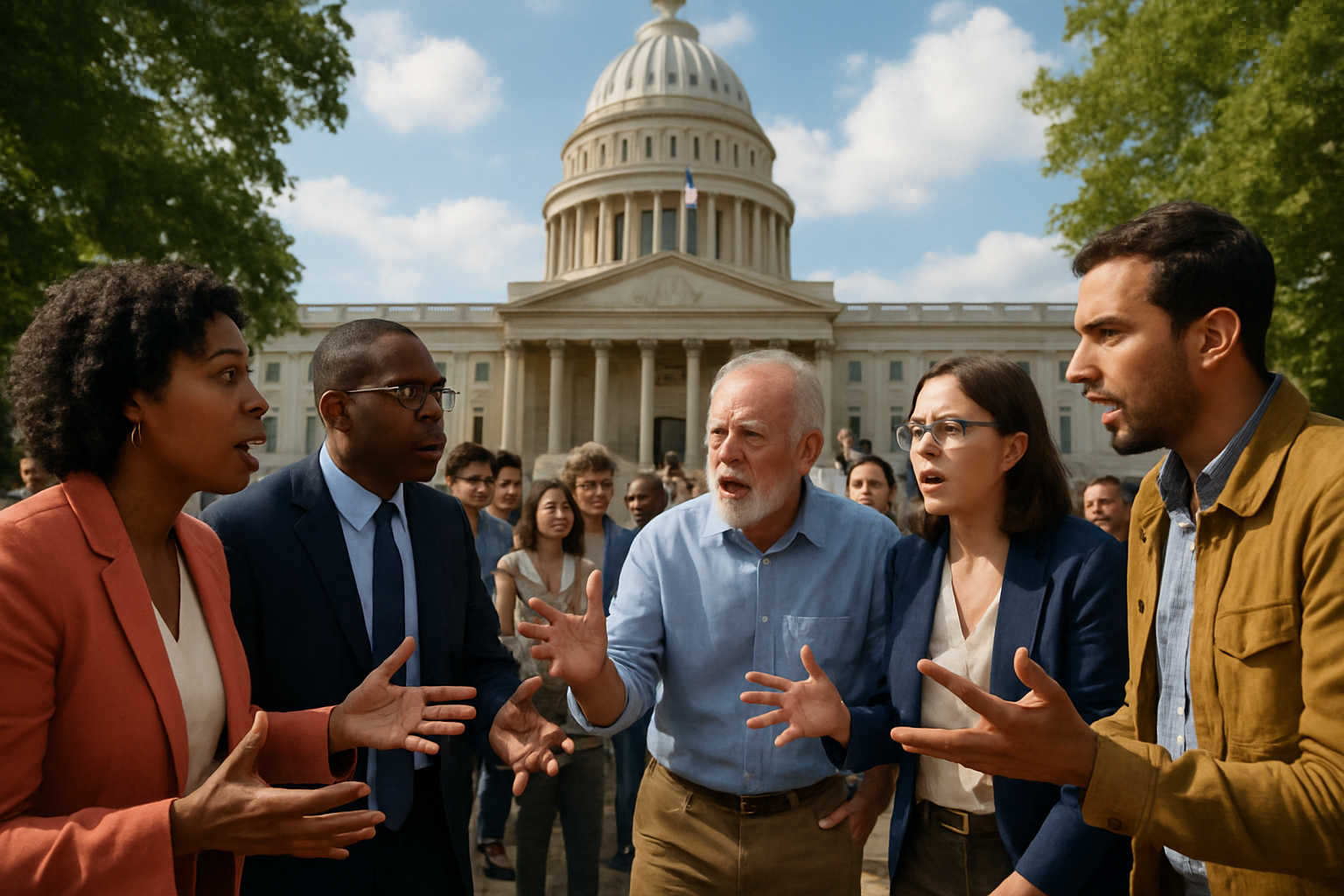
Democracy is a system where individuals have the right to govern themselves, and in this regard, popular sovereignty, free elections, and the protection of fundamental rights and freedoms, along with the rule of law, are among the most essential elements. However, the realistic implementation of such a governance model depends on cultural and social dynamics. When considering it specifically in the context of the Turkish Republic of Northern Cyprus (TRNC), the effectiveness of this system is worth questioning.
Representative Democracy and External Interventions in the TRNC
Claims that elections in the TRNC and its democratic practices are subject to various external interventions frequently arise. Past incidents have heightened concerns that politics is being directed from outside. For instance, the 2020 electoral process distinctly demonstrated that external influences significantly shaped the outcomes. During the formation of the current government, negotiations conducted by politicians with power centers in Ankara have led to an impression that the public’s will is being disregarded.
Democratic Culture and Understanding
The democratic culture and understanding necessary for democracy to function effectively have not sufficiently developed in some societies. In such countries, alongside the adverse effects brought about by social and economic structures, serious deficiencies are also observed in governance practices. Critics highlighting this situation contend that the existing system has transformed into a dictatorship of the majority. In this context, the failure of elected representatives to fulfill their duties has repercussions in new elections.
The developments in the TRNC’s 2025 presidential election once again underline the seriousness of this issue. Despite the current government not being inclined to resign after the newly elected president received 63% of the vote, this situation indicates the existence of a governance mindset that disregards the public. This contradicts the fundamental principles of democracy, as respecting election results is one of the most important responsibilities of any government in democratic systems.
Election Laws and Changes
Amending election laws as election dates approach is not an accepted practice in a democratic society. Even if such a change becomes necessary, it is expected to be carried out with broad consensus within society. However, in the current situation, there are attempts to change election laws based on party interests without consensus and consultation with the public’s will. Such an approach can lead to significant problems for societies that have not internalized democracy and can result in social unrest.
In conclusion, it is observed that representative democracy in the TRNC does not operate healthily as a genuine democracy. External factors and internal problems contribute to the weakening of the system, while neglecting the importance of the public’s will could lead to much larger issues in the future. The fact that those who need to receive the necessary message remain distant from grasping this reality is an alarming situation in terms of democratic culture.
Source: www.yeniduzen.com