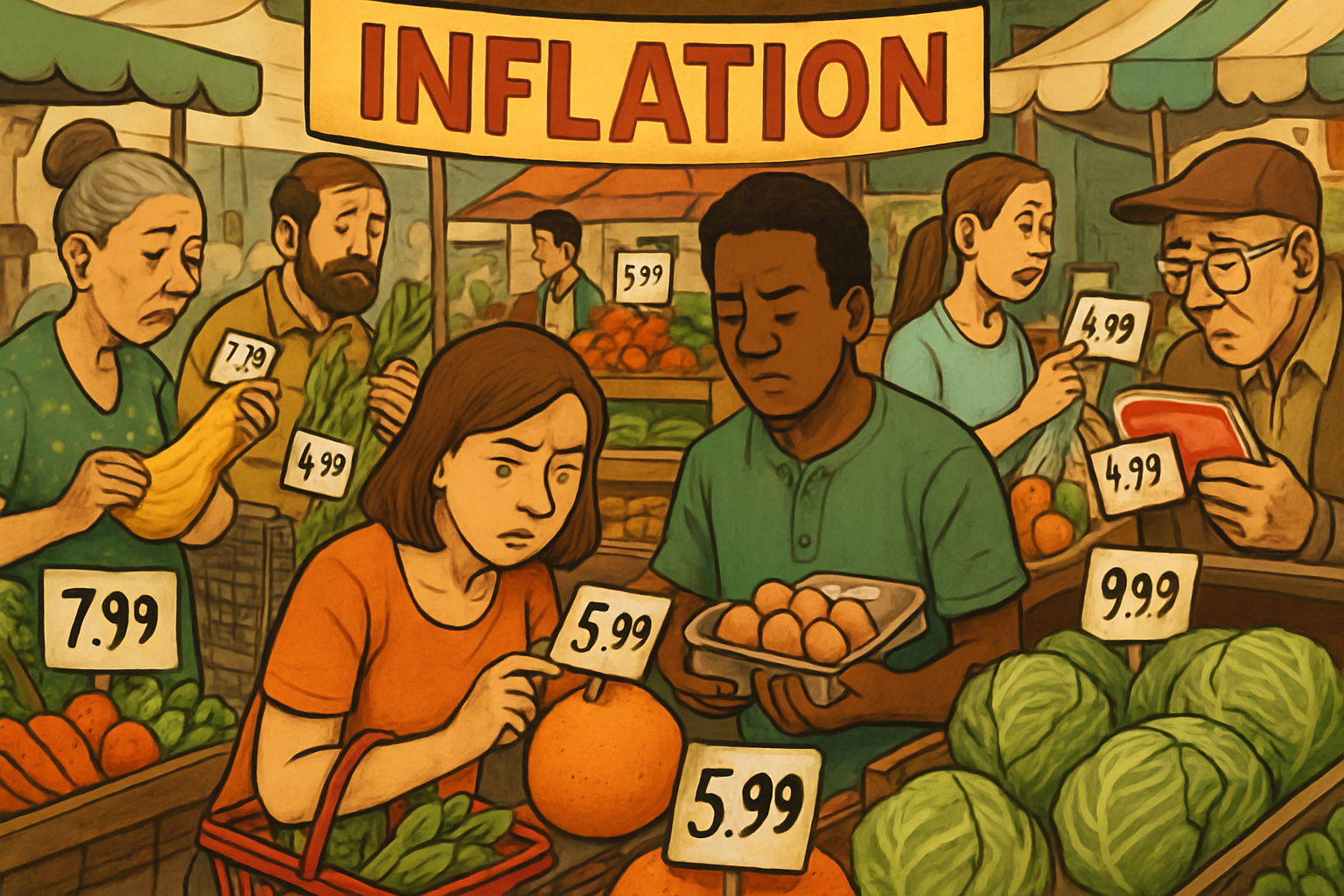
Inflation Rises in July
The Statistical Institute announced the inflation rate for July 2026 as 2.90%. This level marks the highest monthly rate recorded for the year, indicating the most significant rise since the 4.62% rate in April. The annual inflation has reached 38.10%, highlighting a notable increase compared to the same period last year. The cumulative inflation rate for the first seven months of the year has been set at 20.34%.
In contrast to the annual inflation rate of 38.10%, reports suggest that the government’s projected inflation forecast of 18% for 2027 in the Medium-Term Program seems unrealistic.
Regional Comparisons and Price Increases
In July, the inflation rate in Turkey was determined to be 1.78%, while the annual inflation stabilized at 31.75%. Comparatively, the inflation rate in Northern Cyprus is approximately 6.35% higher than that of Turkey. In Southern Cyprus, the annual inflation rate is at 4%, with the EU average around 3.
Among the main commodity groups that showed significant increases this month, education recorded the highest rise at 9.79%. The restaurant and hotel sector experienced a 5.46% increase, while healthcare saw a rise of 4.8%. However, some categories such as clothing, footwear, and alcoholic beverages showed a decline.
Yearly inflation in education has surged by 65%, while healthcare prices have increased by 44%. This indicates that inflation in essential services such as healthcare and education is surpassing the overall inflation rate.
High inflation, coupled with rising food prices, is complicating daily life; food inflation has alarmingly exceeded 43%.
Economic Impacts and Recommended Solutions
The food expenditure threshold for a family reached 43,469 TL by the end of June, while the poverty line has reached 234,462 TL. With the release of July data, these numbers may rise even further.
Currency fluctuations are increasing the prices of imported goods, leading to price hikes across all sectors. The recent increases in fuel prices since July are expected to impact the inflation rate significantly. It has also been observed that the impact of increases in electricity and natural gas prices is triggering additional price rises.
Due to the high inflation in Cyprus, the purchasing power of the public is declining, and financial losses are escalating. The government’s failure to conduct regular market inspections is exacerbating cost increases. Additionally, a review of the government’s financial oversight policies is necessary to ensure that essential services needed by the public are safeguarded.
Immediate measures must be taken to address the economic difficulties and enhance the purchasing power of the public. The government should take steps to control inflation, which remains the most pressing issue for the population during this process.
Source: www.yeniduzen.com