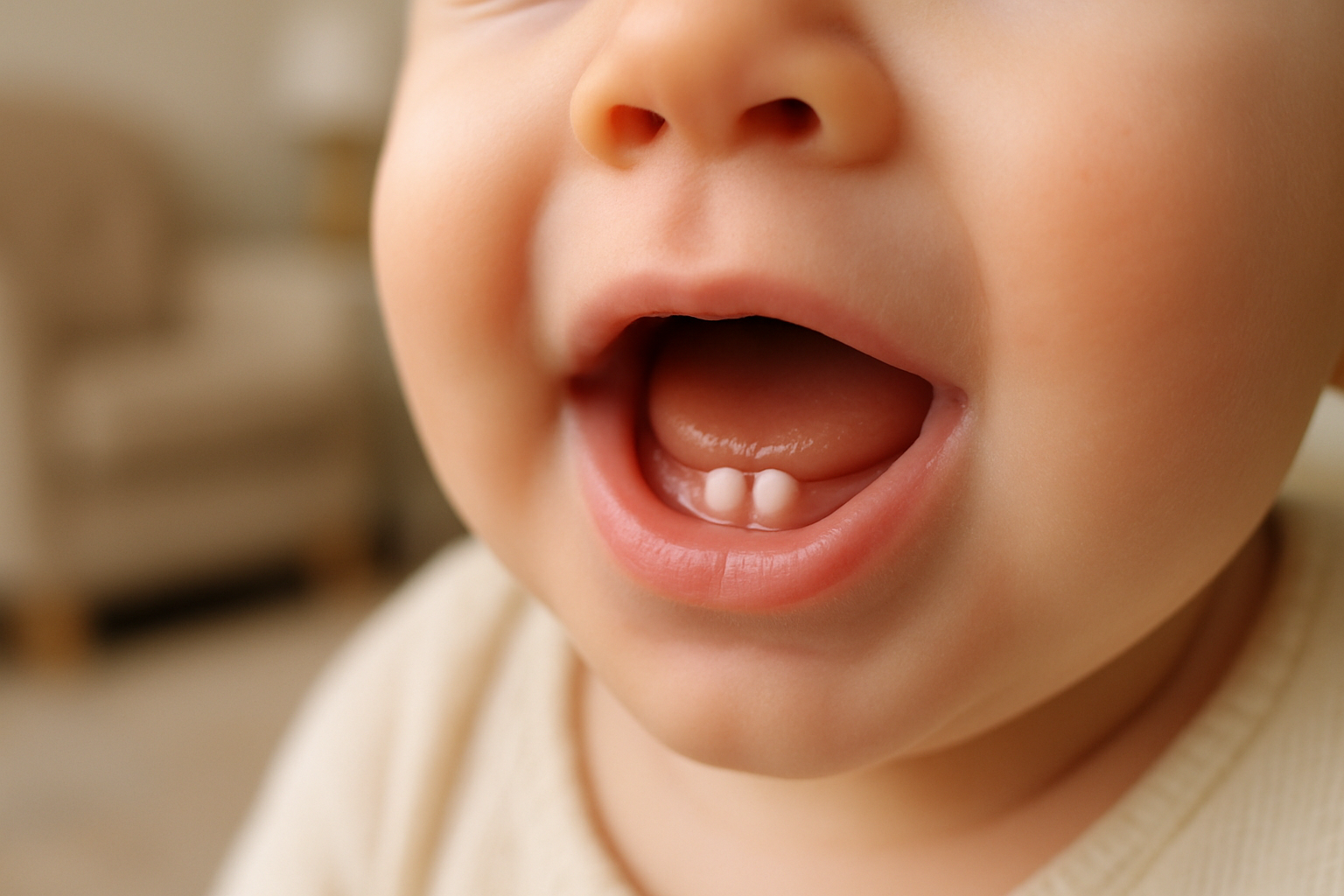
The emergence of the first teeth in babies is a significant milestone for families. The sight of these little white teeth appearing from the gums is an important indicator of the child’s healthy development. However, parents often have questions that linger in their minds: “Is it normal if my baby hasn’t cut a tooth yet?” or “Does a delay in teething indicate a health issue?”.
When Does the Teething Process Begin?
The teething process varies for each baby. Generally, the first milk tooth begins to emerge around the age of 6 months. However, for some babies, this process can start as early as 4 months, while for others it may be delayed until 10-12 months. This variation is not solely an indication of a health problem. Factors such as genetics, the baby’s rate of development, and individual differences can influence when the teeth come in.
By the time a child reaches 3 years old, they should typically have 20 milk teeth in their mouth. However, if a 13-15 month old baby still hasn’t cut any teeth, it’s important to evaluate the situation. Potential reasons for delayed teething include genetic predispositions, birth date, vitamin D deficiency, and certain hormonal disorders.
Signs of Teething and Care Tips
Signs of teething can include mild discomfort, excessive drooling, itchy gums, and loss of appetite. However, if there are symptoms like high fever, persistent vomiting, or severe diarrhea, these may not be related to teething and should be evaluated by a doctor.
Dental care is equally important as the timing of tooth emergence. Some families may neglect these teeth, thinking, “They’re just baby teeth, so it doesn’t matter.” However, baby teeth not only serve a chewing function but also play a critical role in the child’s speech development and the healthy growth of facial bones. Losing baby teeth too early can lead to orthodontic issues later on.
Cleaning should begin as soon as the first tooth emerges. Using a clean gauze to wipe the teeth and then brushing with an age-appropriate toothbrush is the recommended approach. Additionally, visits to a pediatric dentist should not be overlooked and should occur after the first tooth appears or by the time the child turns one.
In conclusion, every child has a specific developmental timeline, and variations within this process can be considered normal. However, if there are significant delays, it is essential to consult with a specialist. Parents must pay attention to their children’s dental health and ensure regular check-ups to promote healthy oral development.
Source: www.yeniduzen.com